When “Made In” Is Not Enough: Managing Origin Fraud as an Operational Risk
Singapore Customs has charged three individuals and a Singapore company over an alleged scheme involving China-made mattresses that were falsely stamped “Made in Singapore” and exported to the United States, apparently to circumvent U.S. import duties.
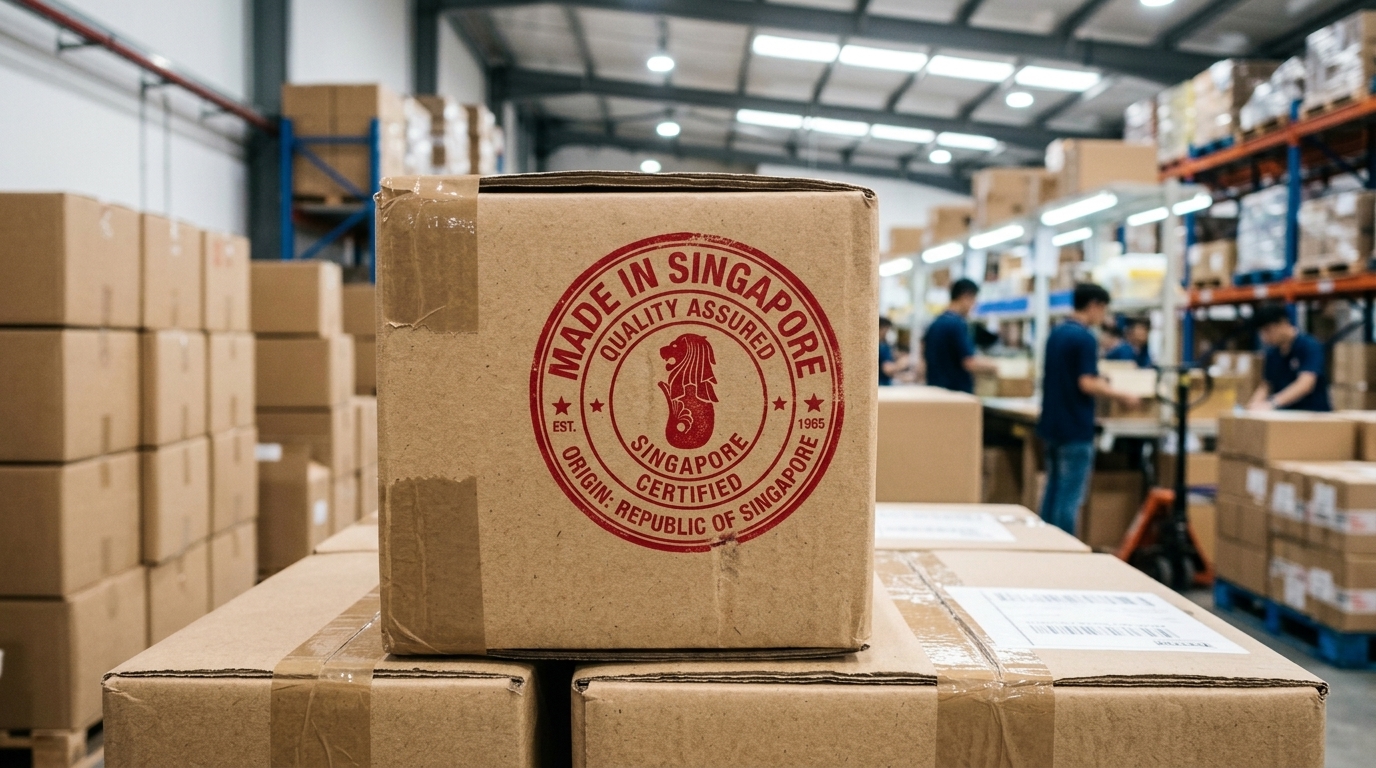
The case is timely. Only days earlier, the White House published The Great Transshipment Scam, drawing renewed attention to the use of third countries to disguise the true origin of goods and circumvent tariffs.
For companies operating across increasingly complex supply chains, there is a broader lesson: origin is fundamentally a due diligence question.
Basic paperwork is evidence is insufficient: The risk is asymmetric
Country of origin is often treated as a documentary matter. An invoice identifies an origin. A supplier provides a declaration. A Certificate of Origin (COO) is produced. The information is entered into the organisation's systems and the transaction proceeds.
But accepting paperwork at face value was never sufficient. Bad actors routinely use false documentation, misleading descriptions and seemingly legitimate corporate structures to circumvent sanctions, export controls and other trade restrictions. Advances in technology are also making sophisticated falsification increasingly accessible.
Origin fraud does not always fit neatly within conventional risk taxonomies. It may sit somewhere between customs compliance, sanctions, supply-chain risk, procurement, fraud and broader operational risk.
The reality is that responsibility is fragmented. Boards and senior management should therefore consider whether origin and transshipment risks are adequately identified within the organisation's existing risk taxonomy, whether ownership is clear, and whether appropriate controls and escalation protocols / mechanisms exist.
In practical terms, organisations should be capable of establishing why they believe goods originate where their suppliers say they do, including the labour involved.
What should organisations be looking for?
Effective due diligence does not require an investigation into every shipment. It requires a risk-based framework capable of recognising when the facts warrant closer scrutiny.
Depending on the nature of the business and risk, this may include:
understanding where goods are actually manufactured and by whom;
identifying key suppliers, subcontractors and other relevant parties within the supply chain;
considering the provenance of relevant inputs and, where applicable, labour;
identifying unexplained changes in shipping routes, processing locations or intermediaries;
testing whether claimed processing or transformation is commercially and operationally credible;
comparing trade documentation against logistics and other available supply-chain information;
identifying inconsistencies between stated production capacity and actual trading volumes; and
establishing clear escalation and investigation procedures where discrepancies arise.
The objective is not perfect knowledge of every transaction. It is to identify the circumstances in which reliance on documentation alone is no longer reasonable.
A question for Boards
Boards do not need to investigate individual shipments. Nor should they attempt to design operational compliance controls themselves. They should, however, be asking whether management has identified the risk and established an effective framework for managing it. Some useful questions include:
Where does origin fraud sit within our risk taxonomy?
Who owns that risk?
What information do we rely upon when establishing origin?
What red flags trigger enhanced due diligence?
Can our systems identify inconsistencies between documentation and the underlying supply chain?
Who investigates and escalates those inconsistencies?
These questions are becoming more important as regulators themselves develop increasingly sophisticated methods of detecting anomalous trade patterns.
Conclusion
The broader direction is clear. Trade compliance is moving beyond checking individual documents and names towards understanding relationships, transactions and supply chains.
Companies need not replicate the investigative capabilities of governments. But they should recognise the same fundamental principle: individual pieces of information can appear perfectly ordinary when considered separately. Risk often becomes visible only when they are considered together.

SERVICES
Risk & Regulatory Advisory
We don’t write long memos. We build compliance that holds up - in audits, in practice, and under pressure.
Learn
More
Learn
More


SERVICES
Integrated Screening Solutions
In today’s complex global trade landscape, managing risks effectively is not just an option—it’s a necessity.
Learn
More
Learn
More

SERVICES
Internal Investigations
In today's business environment, it's more important than ever to have robust compliance and ethics programs in place.
Learn
More
Learn
More

SERVICES
Compliance Training
Empower your workforce with specialized training and academic modules focused on technical mastery and professional integrity.
Learn
More
Learn
More