Has Sanctions Enforcement Reached the Ship's Bridge?
The UK's prosecution of the captain of the MV Smyrtos may prove to be one of the more significant sanctions enforcement developments for the maritime industry this year.
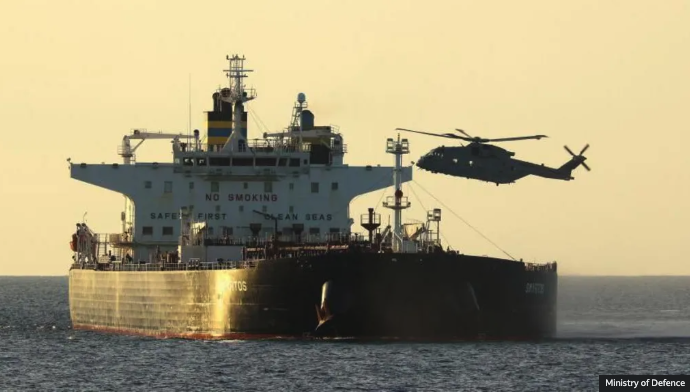
For decades, sanctions compliance has largely been regarded as the responsibility of legal departments, compliance officers, financial institutions, shipowners, and charterers. The master's role has traditionally been viewed as operational: navigating the vessel, managing the crew, and executing the voyage. Compliance obligations were generally assumed to rest elsewhere.
The MV Smyrtos case challenges that assumption.
According to public reports, UK authorities intercepted the vessel in the English Channel before charging its captain with offences relating to the transportation of prohibited Russian oil under the UK's sanctions regime. The vessel itself was reportedly operating under highly unusual circumstances, having been sanctioned, removed from its flag registry, and allegedly carrying Russian crude in contravention of applicable restrictions.
The prosecution will ultimately be determined on its own facts. Yet the case raises broader questions that extend well beyond this particular voyage.
Shadow fleet operations are deliberately structured to frustrate enforcement. Beneficial ownership is frequently obscured through layers of shell companies, nominee arrangements, opaque corporate structures, and repeated changes of flag and management. These characteristics have historically made it difficult for enforcement authorities to attribute responsibility to those ultimately directing the voyage.
Against that backdrop, the decision to prosecute the captain is noteworthy. It raises the possibility that sanctions enforcement may increasingly focus not only on those who own or finance a voyage, but also on those exercising operational control over it.
That, in turn, raises difficult questions for the maritime industry.
What level of due diligence should now reasonably be expected of a vessel's master? To what extent should captains understand the sanctions status of the cargo they carry, the ownership of the vessel they command, or the commercial arrangements underpinning a voyage? Where should responsibility end for a master acting under instructions, and begin for those who planned the transaction?
Equally significant is the position of crew members serving aboard shadow fleet vessels. Many are employed through complex recruitment chains with limited visibility over the ownership or commercial purpose of the ships on which they serve. Whether future enforcement actions extend beyond masters to other operational personnel remains uncertain, but the case highlights the increasingly difficult environment in which seafarers now operate.
Much will depend on what the prosecution is ultimately able to establish regarding the captain's knowledge, involvement, and intent. Until those issues are tested before the courts, it would be premature to draw definitive conclusions about the legal boundaries of liability.
Nevertheless, one point is already clear.
The MV Smyrtos prosecution suggests that sanctions enforcement is evolving. Increasingly, the focus appears to be moving from corporate structures that are often deliberately opaque to the individuals responsible for executing high-risk voyages.
For shipowners, operators, compliance professionals, insurers, and maritime counsel, this is a case worth following closely. Regardless of its ultimate outcome, it is likely to influence future discussions about operational accountability, sanctions due diligence, and the evolving responsibilities of those at sea.

SERVICES
Risk & Regulatory Advisory
We don’t write long memos. We build compliance that holds up - in audits, in practice, and under pressure.
Learn
More
Learn
More


SERVICES
Integrated Screening Solutions
In today’s complex global trade landscape, managing risks effectively is not just an option—it’s a necessity.
Learn
More
Learn
More

SERVICES
Internal Investigations
In today's business environment, it's more important than ever to have robust compliance and ethics programs in place.
Learn
More
Learn
More

SERVICES
Compliance Training
Empower your workforce with specialized training and academic modules focused on technical mastery and professional integrity.
Learn
More
Learn
More