Beyond Technology: Is there Trust to Combat Fraud and Illicit Flows
The fight against illicit financial flows is often portrayed as a race between increasingly sophisticated criminal networks and increasingly sophisticated technology. Yet technology alone is unlikely to close the gap. The 2025–26 FinCrime Frontier Report found that only 11% of organisations were "very confident" in the quality of their data, despite growing investment spend in AI and automation.
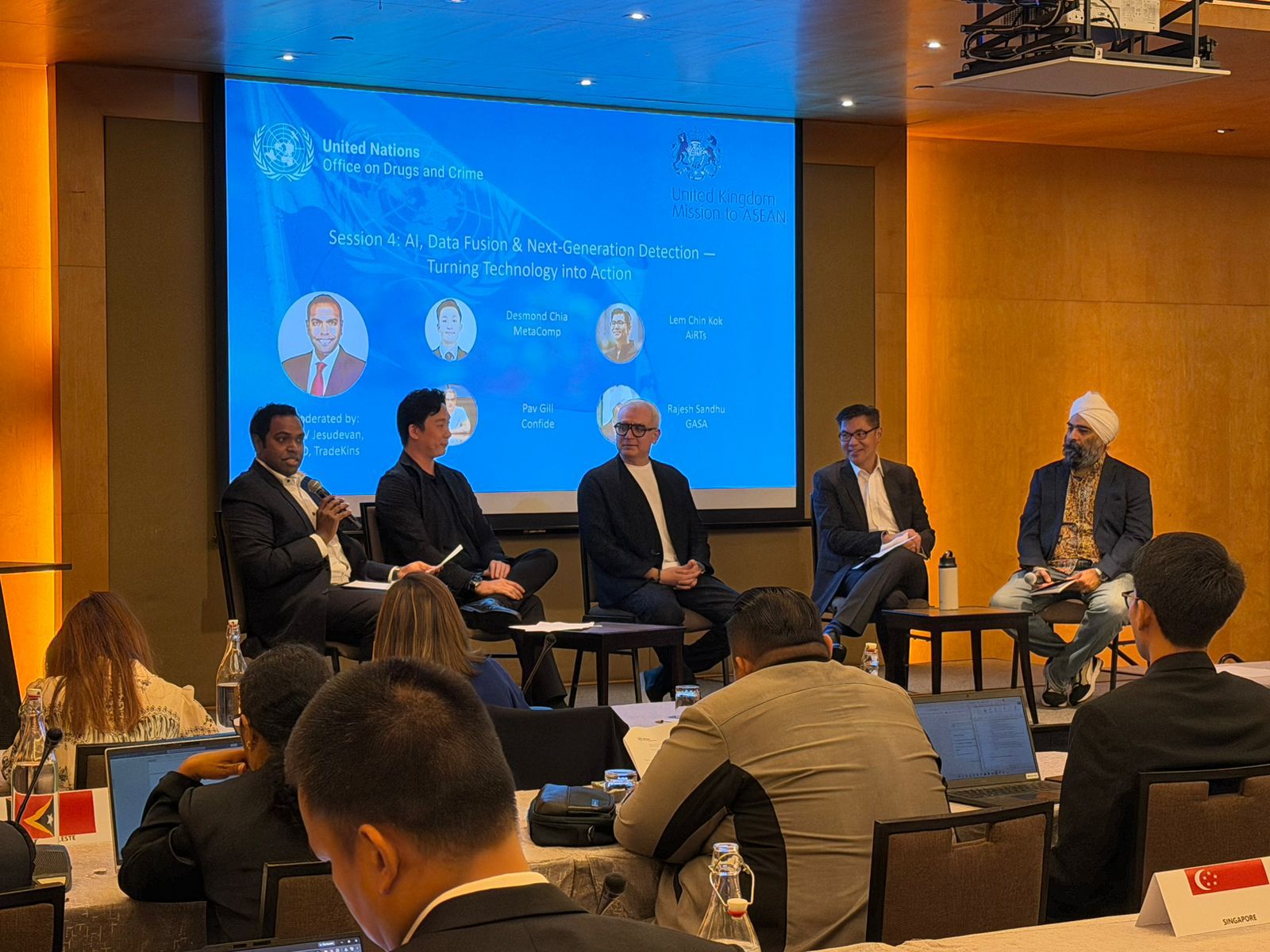
Tradekins participated in two sessions at the recent UNODC Regional Public–Private Partnership Dialogue in Singapore jointly organised by the UK Government; and one conclusion stood out above all others: technology is no longer the principal constraint.
Trust is.
Across discussions involving financial intelligence units, law enforcement agencies, banks, fintech companies, virtual asset service providers, technology firms and international organisations, there was broad agreement that the tools available to combat financial crime have improved dramatically. Artificial intelligence can identify suspicious transaction patterns in real time. Graph analytics can reveal hidden relationships across money mule networks. Data fusion techniques allow investigators to connect information from multiple sources that would previously have remained isolated.
Yet organised criminal groups continue to adapt. The challenge is not simply that criminals have also embraced technology. It's that they operate across jurisdictions, institutions and sectors with a level of agility that many public and private organisations struggle to match.
This places public-private partnerships at the centre of modern financial crime enforcement. The discussion highlighted several initiatives that demonstrate what effective collaboration can achieve. The United Kingdom's Joint Money Laundering Intelligence Taskforce (JMLIT) has shown the value of structured information sharing between financial institutions and law enforcement. Singapore's COSMIC platform has taken an important step by providing a legislative framework for financial institutions to exchange information on higher-risk customers under defined circumstances.
These initiatives are significant not because they rely on better technology, but because they establish trusted mechanisms for collaboration. Institutions continue to grapple with legal liability, data privacy, confidentiality obligations, operational silos and differing risk appetites. These are governance challenges rather than technological ones, which even AI will not overcome.
Perhaps the most important lesson from the dialogue was that the future of financial crime prevention will depend less on which institution possesses the best technology and more on whether institutions can work together effectively.
For organisations in the private sector, this has practical implications. Investment in AI, analytics and automation remains essential. But those investments should be accompanied by equally deliberate efforts to strengthen governance frameworks, information-sharing protocols, and trusted relationships with both public authorities and industry partners.
Technology will continue to evolve. Whether you evolve with it may ultimately determine how successful we are in empowering our people and desiging purpose built solutions.
Are your current information-sharing arrangements fit for today's threat environment and able to receive, manage and resolve related concerns?


SERVICES
Risk & Regulatory Advisory
We don’t write long memos. We build compliance that holds up - in audits, in practice, and under pressure.
Learn
More
Learn
More


SERVICES
Integrated Screening Solutions
In today’s complex global trade landscape, managing risks effectively is not just an option—it’s a necessity.
Learn
More
Learn
More

SERVICES
Internal Investigations
In today's business environment, it's more important than ever to have robust compliance and ethics programs in place.
Learn
More
Learn
More

SERVICES
Compliance Training
Empower your workforce with specialized training and academic modules focused on technical mastery and professional integrity.
Learn
More
Learn
More